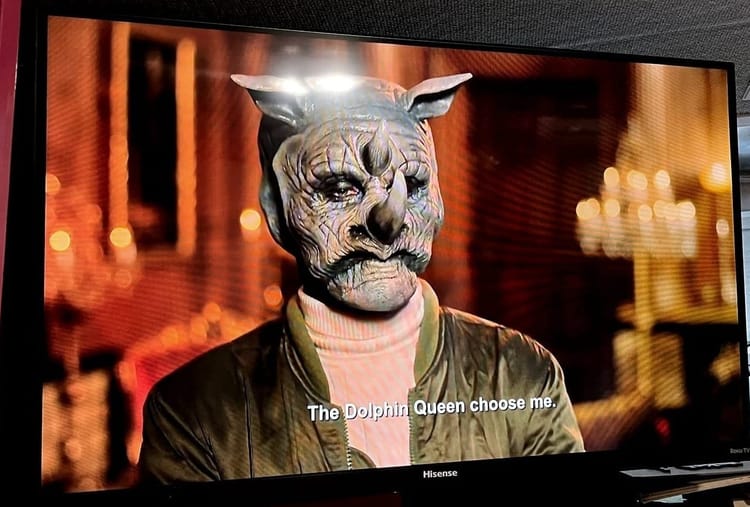
B A N K R U P T C Y Y Y Y Y Y Y
You can skip directly to the special offer here.
And now announcing: tax-deductible giving to The Faggot-Witch Whenever. To arrange a tax-deductible gift, email donationwitch@fwwhenever.com.
This publication is a lifeline to me. I’m so grateful you’re here, and I hope it’s nourishing for you, too.
I HAD $271.
It’s not a brag—just an accounting of the total amount of money in my only bank account. Also not a brag—it’s just privilege—but I probably haven’t had that little financial wealth since sometime in grade school, given the savings account we started with my First Communion money.
Still I started dancing when I saw $271 on my bank’s app a few weeks ago. “I have three hundred dolllllllars,” I sung out, as I glided around my wee home. Sure, I was rounding up. But I thought I’d had only $200, so the surplus was cause for a big celebration. I’d logged in to see if I had enough money for a supportive pillow, because, for the first time since college, I don’t have any credit cards.
Not usable ones, anyway. All four are over the limit.
Last month, I declared bankruptcy. It sounds like a big deal, because I wasn’t raised by the superrich—or, like, the current president—people who do it as a matter of course to escape responsibilities and keep their assets. I was raised by regular people. Like Abraham Lincoln was. And when he went into debt, owing 20 times more than his entire annual salary, they auctioned off his horse.
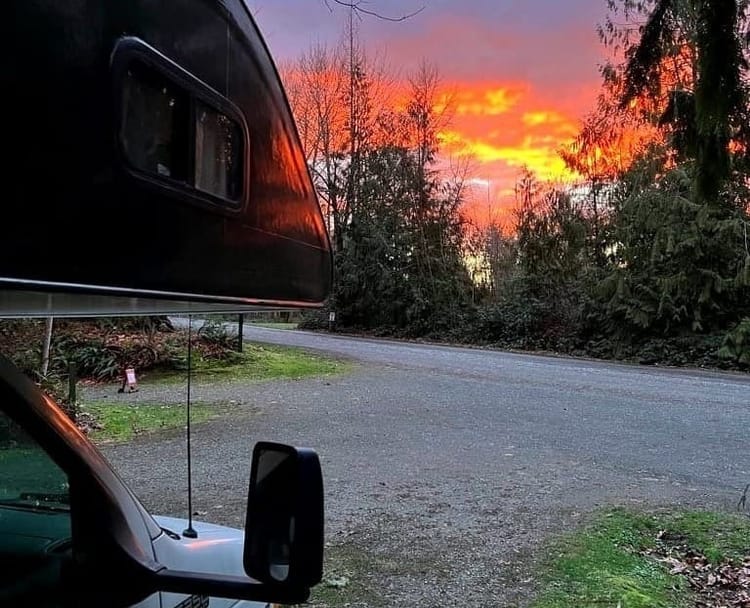
When my father declared bankruptcy, my parents lost their cars. But they were leased. And that was in Ohio. Every state is different, but here in Washington, up to $15,000 of a motor vehicle is exempt from seizure in a Chapter 7 bankruptcy. So I can keep my cash-bought, 27-year-old RV, which is also my residence, on two counts: Homes are also exempt, up to the median home price in your county. (In the county containing Seattle, that’s $968,300.)
My wages are also protected. And my clothes, and my home goods. And my phone and my laptop and even my jewelry (praise be to Nolo.com for explaining this so clearly). I learned all these things in the month of preparing my paperwork. I googled so much. I figured out how to read the Washington state code (“how to read subsections of state law”), which needs to be cited for any exemption I claim. Yes, I also spent a lot of time googling free legal help. Some exists, but the limited spots go like Pearl Jam tickets in the nineties. I looked up bankruptcy-lawyer costs (around $1,500) I can’t afford. I put on music and sat at my little dinette and rocked my research skills, which are also a major privilege.
 Gabriel Mac
I couldn’t figure out every single thing. I was pretty sure, but not positive, that I couldn’t protect the green-burial plot I bought in California in 2020, when I was convinced I’d die utterly alone, and which is my sole remaining investment. Burial plots are exempt in Washington only if they were sold by a nonprofit. And the state’s “wildcard” exemption, which I can use to keep $10,000 of whatever I choose, doesn’t nearly cover its value, which has tripled since I bought it. So on my only real estate, which is in a cemetery, I stand to lose 20 grand.
If only my money came from a trust! That, naturally, would be exempt.
I’ve been freaking out. Finally uploading the paperwork to the United States Bankruptcy Court of the Western District of Washington website, I felt less stressed momentarily. I’d spent several months beforehand freaking out, while simultaneously trying to calm myself. These weeks since filing, I’m freaked out again, though I know four (!) trans people who’ve had to declare bankruptcy. Each went on living their largely disrupted life, with just scarlet BANKRUPTCY letters on their credit reports for some years. Still, no matter how many times I’ve leapt into the unknown by now, the unknown is still unknown.

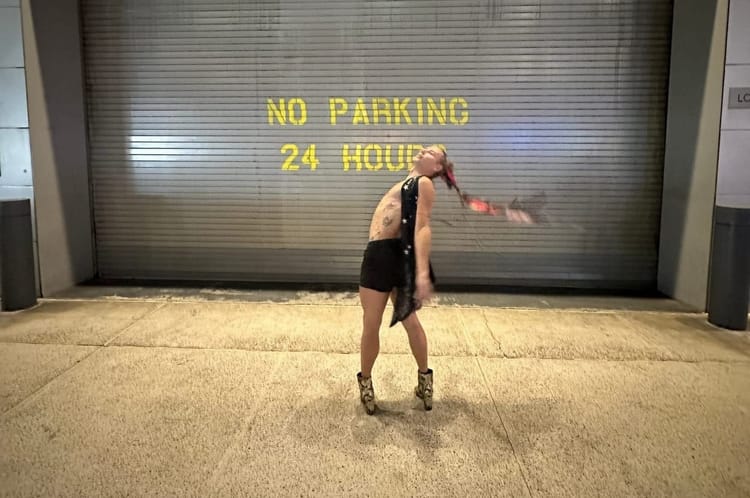
SETH AND I had joked that declaring bankruptcy is literal. That I would just run outside and holler “Bankruptcy” to the sky. When we got on the phone after I filed, I duly announced: “BANKRUPTCYYYYYYYYYYY!”
This makes me laugh. And, it makes me cry a little. Like all non-rich people—the people who rig the system, who take advantage of it—of us—I have been taught that declaring bankruptcy means I’m a piece of shit. A loser, or a leech, or a leper. A failure and a waste of space. A drain on society.
And, ooooh. Dare I say it?
Not a real man.
Or, a bad one. I say with zero exaggeration that I would rather die than be like my father.
Abraham Lincoln repaid his debt. Some scholars say he did it within 12 years; others think it took him more than two decades. Federal bankruptcy didn’t exist for much of that time, so no one can say if he would have paid his creditors off if it had. My Chapter 7 bankruptcy is for discharging debts—that is, not paying them back.
“Congratulations!” Seth said when I declared bankruptcy to him. “Congratulations!” everyone else I’ve told has responded, too, right down to a medical professional, who said next: “You don’t owe The Man shit.”
I was required to submit a list of the creditors on whom I’d be defaulting. I admit I felt better as I compiled them. American Express, which has an annual net income of $10 billion. Citigroup, 2025 profit $14.3 billion. JPMorgan Chase, 2025 profit: a staggering, absolutely stupid, $57 billion.
I work. I’ve been working since I was nine, when I started babysitting for the neighborhood, a few dollars for watching kids on their parents’ date night. I remember how lucky I felt when one of the women started giving me a whole $5 bill. I’ve worked building this business, while also juggling homelessness. I worked my ass off fighting the state of Washington for coverage of a legally covered gender-affirming surgery. I lost. Onto my Visa it went.
Next week marks the eighth anniversary of my re-birth from surgery that removed my boobs. Eight years of a chest so flat it’s concave in spots. Eight years of being able to breathe big, bigger, into the negative space left by my breasts. I hate—I fucking hate—that it meant I couldn’t do my job without harm, in an anti-trans industry, an anti-trans world. I now love that being able to feel myself means being able to know myself. Even if it means knowing that I’m too wild and radical to be supported by magazines, which have spent their entire history erasing, oppressing, and alienizing trans and gender-nonconforming humans.
Through the end of March, I’m celebrating trans wildness by offering a special $8 subscription rate. If you’ve ever considered financially supporting my work—and, therefore, my existence—please support it, in this time of my fresh start, now.
I’m still working through internalized judgment that it’s me who’s the bad guy, rather than the billionaires I borrowed money from and can’t, won’t, pay back. Federal bankruptcy requires completing “debtor education” online, which my friend Stevey called “shame class” after I told them what they involved: having both the pre-fab material and a “credit counselor,” who emailed me after I finished, tell me I need to learn to budget. The course advised that I sell my belongings to buy necessities I can’t afford, and told me, over and over, that I should simply get more jobs.
“One option is to reduce your living expenses to the absolute bare minimum,” one page said. “And, while doing so, increase your income.”
I don’t just “work” as my shame class—which was approved by the United States Justice Department—defines it. I manage my mental health to an extent probably well above the average person’s requirement. I werk every time I go outside. “Isn’t it nice I could go in the women’s room with a beard and know that if I just said, ‘I’m trans,’ it would probably be okay here?” I asked my friend Chris one night on a Washington ferry. It’s not because I was wearing a jumpsuit and heels that I’d skipped the men’s room, which I would’ve used otherwise (WORK). Rather, it had been the site of a catastrophic intestinal incident that night.
“Could I go into the women’s room like this anywhere you’ve lived?” I asked my well-traveled gay friend.
“Not any bathroom,” he said. “You couldn’t go into any bathroom anywhere I’ve lived.”
I’m working hard to internalize that even though I don’t make much money right now, I am working enough. And I’m working to believe that I deserve to have not only “the absolute bare minimum,” but even—gasp—things I don’t need strictly to keep breathing, but want.
 Gabriel Mac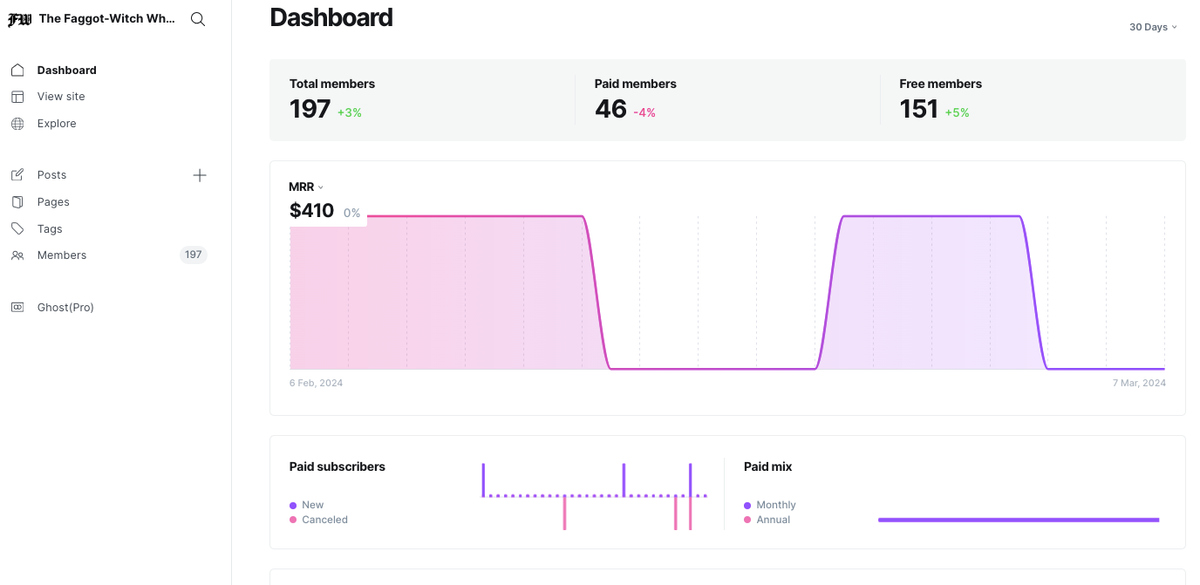
“WHAT WOULD YOU do if you had $100,000?” Chris asked me, two years ago.
In my mid-thirties, when I did have $100,000—$200,000 in the bank, even (shoutout to my 2007-2017 hustle!)—my plan was to buy something that cost extra hundreds of thousands of dollars more: real estate, baby. Like many people indoctrinated in the American dream, I believed that going into house debt would make my life and/or adulthood complete. Apparently, it’s a Western-European dream, too: My French husband shared the delusion that our personal and marital problems would be fixed by a massive mortgage.
These days, I find that the less money I have, the more I can live without; not having money doesn’t feel like it un-completes me in the way not having a six-figure house used to. But I still have dreams. “I would get a stackable washer and dryer,” I told Chris.
At the time, I was bundling my laundry into a big bag, lashing it to my bike with bungee cords, and pedaling it to the local laundromat, often in the rain. I was parked on a farm then that had an outbuilding the owners said could fit a washer and dryer. Now, I live on Stevey’s farm, where they and their husband, Adam, let me use the washer and dryer in their house. Adam estimates that the machines are at least 47 years old. “There is,” as he puts it, regarding even some freshly washed laundry, “a funk.”
For months, I’ve been telling them that I’m going to get the property a new set someday, somehow. Last month, Chris and I went to Home Depot on an unrelated errand, and I detoured to the appliance section to find the washer-dryer set I’d been coveting. Because where I used to scour Trulia, fantasizing about living in the adorable but spacious Craftsman I would buy, I now read reviews of laundry machines.